Every fall, some Long Island boat owners decide the boat will be fine for one more winter without a full winterization. Maybe the season ran late, maybe the boat is new, maybe last winter was mild. Then spring comes, and the first turn of the key turns into a repair bill.
Here's what actually happens when water gets left inside a boat through a Long Island winter, and what a proper winterization protects.
Water expands when it freezes, and it doesn't care what it's inside
When water freezes, it expands. Inside an open bucket that's harmless. Inside a closed metal passage, a hose or a pump housing, that expansion has nowhere to go, so the part gives instead.
On a boat, water hides in more places than most owners think:
- Raw-water cooling passages in the engine block and exhaust manifolds
- Raw-water pumps and strainers
- Freshwater tanks, lines, faucets and showers
- Water heaters
- Heads, sanitation hoses and holding tank lines
- Washdown pumps, livewells and air conditioning lines
Any of them can crack in a single hard freeze. Long Island winters swing between mild spells and sharp cold snaps, and it's the swings that catch owners off guard: a boat that "made it through December" can still split a manifold in February.
The expensive damage: engines
The most costly freeze damage happens in the engine. Raw water left in the block or manifolds can crack castings. Sometimes the crack is obvious. Sometimes it's a hairline that only shows up in spring as a slow leak, overheating, or water where water shouldn't be.
Outboards drain more on their own when tilted down, but they still hold water in places, and lower units with water intrusion can be damaged when that water freezes. Sterndrives and inboards need their cooling systems properly drained or filled with the right antifreeze.
The hidden damage: plumbing and systems
A cracked freshwater fitting or water heater doesn't announce itself in January. You find it in May, when you turn on the pump and water ends up in the bilge instead of the sink. On bigger boats with more systems (multiple heads, AC units, washdowns, icemakers) there are simply more places for trapped water to do damage.
What a proper winterization covers
Every boat is different and the engine manufacturer's procedure always comes first, but a thorough winterization generally includes:
- 1Engine cooling system: draining raw water and/or filling with the correct marine antifreeze.
- 2Fuel: treating the fuel with stabilizer and running it through the system, and managing the tank level to limit condensation.
- 3Oil: changing engine oil and filter before storage, so old oil isn't sitting in the engine all winter.
- 4Lower units and drives: changing gear oil and checking it for water.
- 5Freshwater system: draining tanks, the water heater and lines, then protecting with non-toxic potable antifreeze.
- 6Heads and sanitation: pumping out and protecting the system.
- 7Batteries: charging and disconnecting or maintaining them through the winter.
- 8Everything else that holds water: washdowns, livewells, AC and any other systems on board.
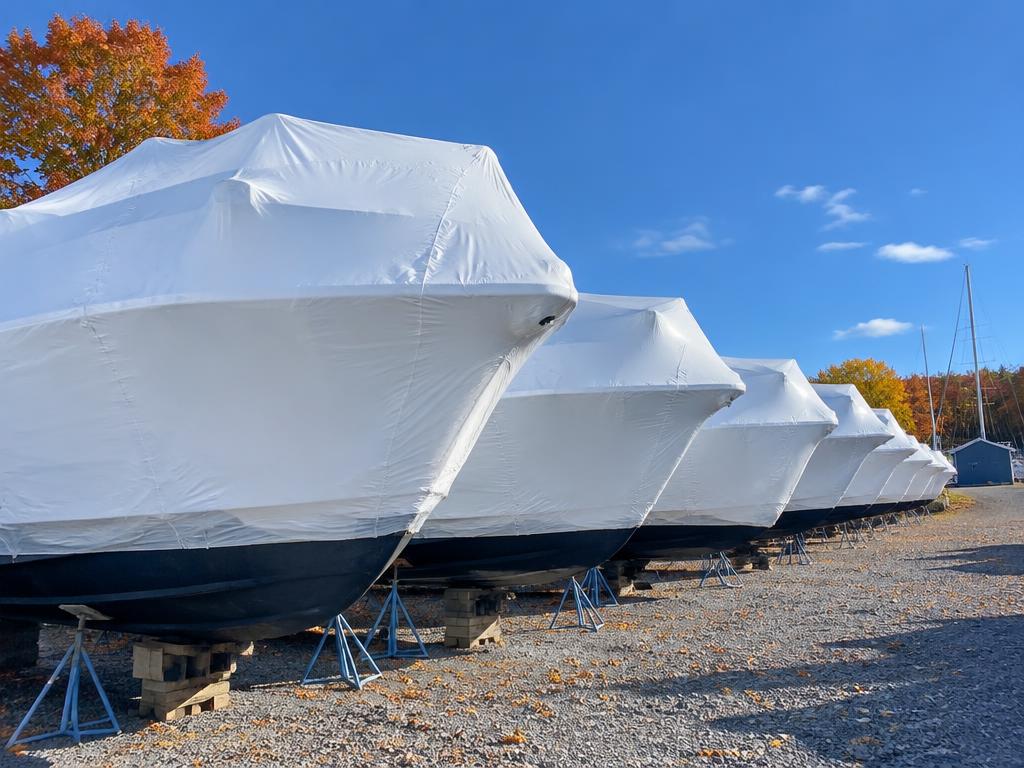
Winterization & Shrink Wrap covers how we handle it at your home or marina.
"My boat is new. Do I still need to winterize?"
Yes. A brand-new boat holds water in the same places an older one does, and freeze damage on a new boat is just as real. New boats also tend to have more systems and more electronics, which is more reason to store them properly. If your boat is new to you, check your manufacturer's and dealer's guidance as well.
What about keeping the boat in the water?
Some boats stay in the water over winter. That brings its own set of risks: ice, snow loads, dead batteries and bilge pumps that stop running. We cover that in Why Boats Sink at the Dock in Winter, and How to Prevent It.
Timing on Long Island
Winterization is a fall job. Hard freezes can arrive earlier than expected, and marinas and technicians get busy as the season closes. The best time to book is right after your last good weekend on the water, not after the first frost warning.
The bottom line
Skipping winterization doesn't save money. It only moves the cost to spring, usually with interest. A few hours of work in the fall protects your engines, your systems and your first weekend of the season.
Need your boat winterized or shrink wrapped anywhere on Long Island? Call Wayne at (866) 253-0892 or send a request.
Need help with your boat?
Wayne comes to your dock, mooring or marina — 24/7 across Long Island.