
Once the boat is winterized, it needs protection from what a Long Island winter throws at it: wet snow, nor'easter winds, freeze-thaw cycles and months of damp air. The two common choices are shrink wrap and a fitted cover. Both can work well. The right one depends on your boat, where it's stored and how you use it in the off-season.
How shrink wrap works
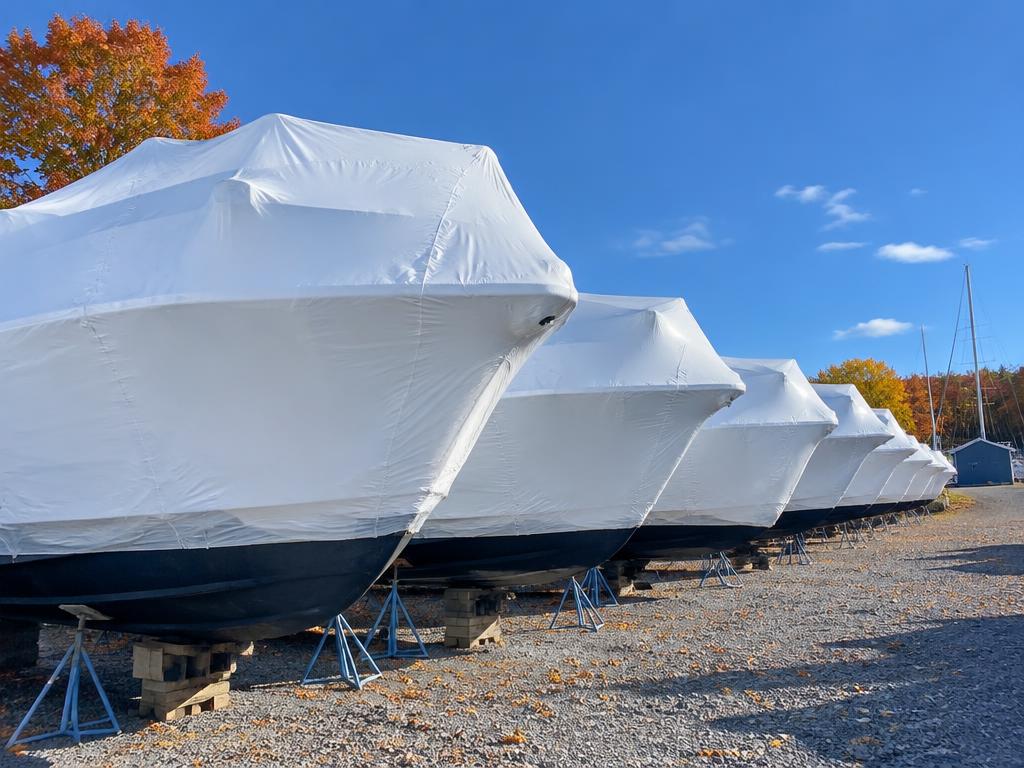
Shrink wrap is a heavy plastic film draped over a support frame and heat-shrunk until it's tight around the boat. Done right, it forms a taut, smooth shell that sheds snow and rain and doesn't flap in the wind.
What makes shrink wrap work:
- A good support structure. The frame gives the wrap a peaked shape so snow and water slide off instead of pooling. A flat wrap collects snow, sags and can tear.
- Tight, even shrinking. Loose spots flap in the wind, wear through and let water in.
- Vents. A boat sealed airtight traps moisture, which leads to mildew and odors. Vents let it breathe.
- Access doors. A zippered door lets you (or your technician) get aboard during winter without cutting the wrap.
Shrink wrap is usually a one-season product. In spring it's removed, and many areas have recycling options for the plastic.
How a fitted cover works
A fitted winter cover is made of canvas or a similar fabric, sized to your boat and reused year after year. Like shrink wrap, it needs a frame or support underneath so it doesn't collect water and snow.
What to watch with covers:
- Fit matters. A cover that's too loose moves in the wind and can rub the gelcoat. One that's too tight strains seams and fasteners.
- Fabric ages. Covers need checking each year for worn seams, torn tie-downs and weak spots.
- Storage. You need somewhere dry to keep it all summer.
Side by side
| Shrink wrap | Fitted cover | |
|---|---|---|
| Fit | Shrunk tight to this boat, this season | Made once, reused |
| Wind | Very stable when properly shrunk | Depends on fit and tie-downs |
| Snow | Sheds well over a peaked frame | Sheds well with a good frame |
| Moisture | Needs vents | Fabric breathes, still benefits from airflow |
| Each season | Installed and removed every year | Installed and removed, stored in summer |
| Up front | Lower | Higher, spread over years |
Which is better for your boat?
Shrink wrap often makes sense if:
- The boat is stored outdoors through a full Long Island winter
- You want a tight, wind-stable shell through nor'easters
- The boat's shape is complex (towers, hardtops, outriggers) and a fitted cover would be hard to make
A fitted cover often makes sense if:
- You plan to keep the boat for many seasons
- The boat is stored somewhere more sheltered
- You'd rather not deal with new plastic every year
Don't forget what's under the wrap
Covering a boat that wasn't properly winterized just hides the problem. Wrap or cover goes on after the engines, plumbing and systems are protected. If your boat stays in the water, covering it doesn't remove the need to watch batteries, bilge pumps and snow load.
A few things to check either way
- 1Is the frame strong enough for wet, heavy snow?
- 2Are there vents, and are they clear?
- 3Can someone get aboard without cutting or unlacing everything?
- 4After big storms, is anyone checking that the cover is still tight and intact?
The bottom line
Both options protect your boat when they're installed well over a solid frame. The worst choice is a loose, flat or unvented cover. That's how winters end with torn plastic, pooled water and mildew.
Want your boat winterized and shrink wrapped at home or at your marina? Call (866) 253-0892 or see Winterization & Shrink Wrap.
Need help with your boat?
Wayne comes to your dock, mooring or marina — 24/7 across Long Island.